Vibe Coded to Shipped Feature
AI-assisted coding tools and agents have unlocked an unprecedented level of functional prototyping. Not just for developers. Product managers, Designers, even the C-suite are building functional prototypes of their ideas in a matter of days, or even hours.
There can be a lot of value in creating a functional prototype of an idea so people can really test out the interactions and experience in ways that are not feasible with less interactive approaches.
People like to push boundaries, so I imagine a future, maybe it’s already here, where people begin to ask: How do I ship my quickly created prototype in our product?
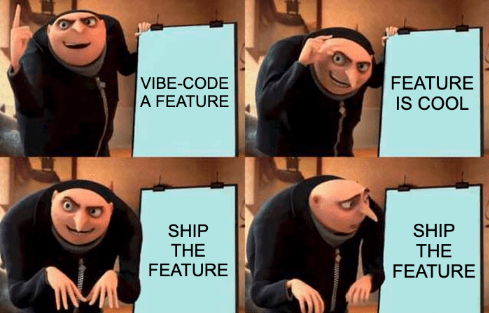
Lots of people will tell you that you can’t just ship a vibe coded feature — well, maybe those “people” are developers. There are some good reasons why you should think twice about shipping a vibe coded concept:
- Do you understand the code the agent wrote?
- What dependencies does the application use?
- How does it store data and is it secure?
- How does the login system work, if it has one?
- … the list goes on
Honestly, the same questions should be asked no matter how the code was created. If the vibe coded prototype is the MVP, then you have many options, perhaps even just shipping the prototype as-is.
Typically, we’re in a situation where we already have an existing platform or application. We can’t just ship the prototype. We need to somehow merge the prototype into the existing code base.
So the more important question could be: How do we integrate this code into our existing platform or application?
Existing platforms and applications have data stores, UI frameworks, routing mechanisms, APIs, and other “primitives” used to create and evolve the systems.
We have some options.
Breakdown and Rebuild
Let’s treat the prototype as exactly that — a quickly created example of what we want to deliver. With this option we should audit the prototype and decompose it into the pieces used to create it. Once we have a breakdown of the system, we can start re-composing the concept using our own primitives.
This approach is what we’ve been doing for years for hastily created prototypes created during hackathons or discovery spikes. The process won’t feel any faster and certainly doesn’t feel “agentic”, but it works.
Vibe Code with Our Primitives
What if we could “teach” the vibe coding agent about the primitives we use? It could use our UI framework and APIs. It could understand our authentication system. It could store data into our data stores.
Agentic code assistants like Cursor and Copilot have rule or instruction files that can provide guidance and details for how the agent constructs the code, and can include code snippets and examples.
Agents can also use MCP servers that can be used to provide more semantic content to the agent about the frameworks and systems already in place.
This approach is how we create the most impact and productivity from code assistant tools. We might not be at this point yet, but we keep getting closer.